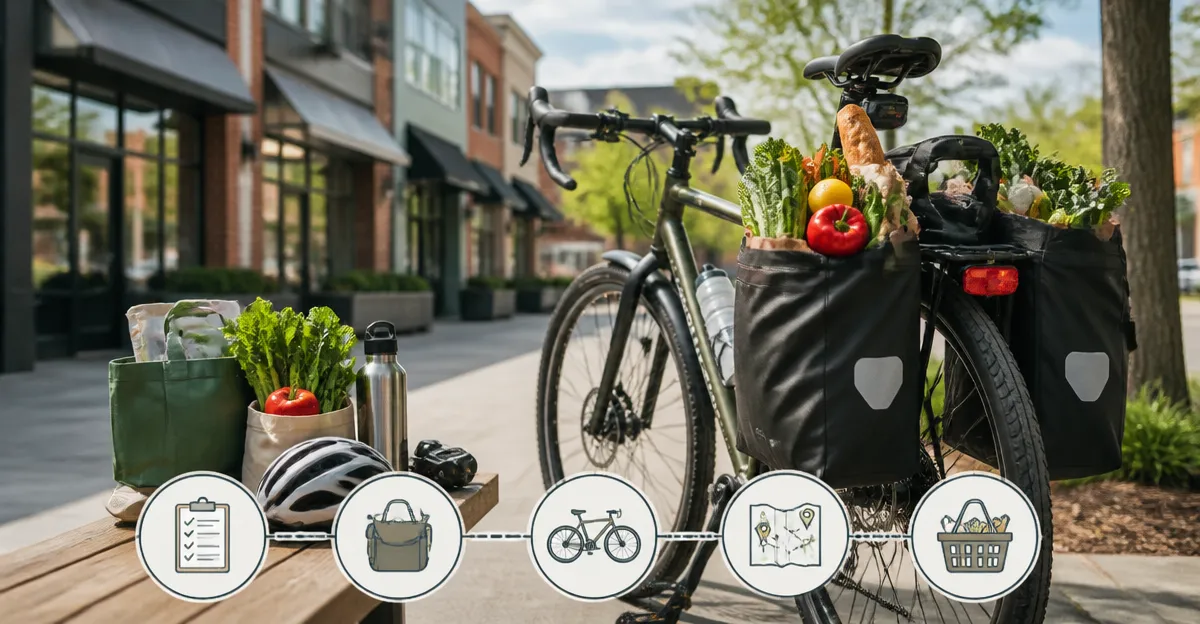
Pannier Strategy Guide: How to Shop Multiple Stores in One Bike Trip — Plan, Pack & Save Time
Introduction
One cyclist often wishes to visit several retail locations without sacrificing efficiency or comfort. This guide explains how to combine route planning, packing techniques, and equipment selection to achieve that goal. Readers will learn how to map optimal routes, choose appropriate pannier systems, and integrate useful accessories into their workflow. By the end of the article, one will be equipped to execute multi‑stop bike trips with confidence and minimal wasted effort.
Background and Context
Urban cyclists frequently encounter the challenge of carrying groceries, hardware, or specialty items between stops. Traditional backpacks can become unbalanced, leading to reduced handling stability. Panniers, which attach to a bicycle’s rear or front rack, distribute weight evenly and free the rider's torso for better control. Understanding the fundamentals of bike geometry, load distribution, and traffic safety is essential before implementing advanced strategies.
Planning Your Route
The first step in a successful multi‑store ride is to design a logical route that minimizes backtracking. Use a digital map service to plot each store's address, then apply the "shortest‑path" algorithm to determine the most efficient sequence. Consider traffic patterns, elevation changes, and the availability of bike lanes to enhance safety. It is advisable to schedule the trip during off‑peak hours to reduce exposure to congested streets.
Once the route is established, calculate the total distance and expected travel time. A typical urban cyclist can maintain an average speed of 12–15 miles per hour on flat terrain, allowing for precise time budgeting. Include buffer periods for loading and unloading items at each stop. By visualizing the entire journey beforehand, one can avoid unexpected detours and ensure timely completion.
Packing Efficiently
Effective packing begins with categorizing items by weight, fragility, and frequency of use. Heavy or dense objects such as bulk groceries should be placed low and near the bike's centerline to preserve stability. Lighter, less fragile items can occupy the upper compartments of the panniers. Use zippered or compartmentalized bags within the pannier to keep smaller accessories organized.
Water‑resistant liners are recommended to protect electronics and paperwork from inclement weather. In addition, reflective tape on the pannier exterior improves visibility during low‑light conditions. By adhering to these packing principles, one reduces the risk of cargo shift and maintains a predictable handling profile.
Choosing the Right Pannier System
Several pannier designs dominate the market, each offering distinct advantages. Hard‑shell panniers provide rigid protection for delicate items but add weight and may be more expensive. Soft‑shell panniers, constructed from woven fabrics, are lighter and foldable, making them suitable for occasional use. Some models feature waterproof coatings, while others incorporate modular attachment points for accessories.
When selecting a system, evaluate the following criteria: capacity (measured in liters), mounting compatibility with your bike's rack, durability of zippers and seams, and ease of access while riding. For cyclists who frequently alternate between cargo and commuter modes, a detachable front pannier set offers flexibility without compromising rear‑rack stability.
Integrating Study Materials on the Go
Longer trips provide an opportunity to engage in productive activities such as reviewing professional study guides. The PANCE/PANRE Study Guide is a Kindle edition that fits comfortably within a medium‑size pannier. At a price of $33.00 and a rating of 3.9 out of 5 stars from nine reviewers, it offers high‑yield clinical content for healthcare professionals preparing for certification exams.
Because the guide is digital, it does not add significant weight and can be accessed on a tablet or e‑reader during rest stops. The study guide includes test‑taking strategies, essential clinical knowledge, and practice questions, making it a valuable companion for riders who wish to maximize otherwise idle time. By pairing educational material with efficient travel, one can advance professional goals while completing everyday errands.
Comparison and Selection Guide
| Feature | Hard‑Shell Pannier | Soft‑Shell Pannier | Hybrid (Water‑Resistant) |
|---|---|---|---|
| Weight | Heavier (2.5–3.5 lbs each) | Lighter (1.5–2.0 lbs each) | Medium (2.0–2.8 lbs each) |
| Protection | Rigid, excellent for fragile items | Flexible, moderate protection | Water‑resistant fabric with reinforced panels |
| Price Range | $80–$120 per pair | $50–$80 per pair | $70–$100 per pair |
| Foldability | Non‑foldable | Foldable for storage | Partially foldable |
| Best For | Professional deliveries, tools | Casual grocery runs | All‑weather commuters |
To decide which system aligns with personal needs, one should rank the criteria by importance. If cargo protection is paramount, a hard‑shell option is advisable despite the added mass. For riders prioritizing lightweight versatility, soft‑shell panniers are the logical choice. Hybrid models serve a balanced audience seeking weather resistance without excessive weight.
Best Practices & Tips
- Perform a test ride with an empty pannier to assess handling before loading cargo.
- Secure all straps and buckles tightly; loose connections can cause pannier swing.
- Distribute weight evenly between left and right sides to avoid steering bias.
- Utilize reflective elements and bright colors for increased visibility.
- Schedule brief rest periods to re‑organize items and prevent over‑packing.
- Keep a portable charger in a small compartment for electronic devices, including e‑readers.
Frequently Asked Questions
- 1. How many stores can I realistically visit in a single bike trip?
- The answer depends on distance, cargo volume, and traffic conditions. Generally, three to five stops within a 15‑mile radius allow for comfortable loading and unloading.
- 2. Do I need a specific type of bike rack for panniers?
- Most panniers require a standard rear rack with a 135 mm mounting width. Front racks are optional but must support the chosen front pannier dimensions.
- 3. Can I ride in the rain with soft‑shell panniers?
- Soft‑shell panniers that feature a waterproof coating or a separate rain cover can protect contents during wet weather. Verify the manufacturer’s specifications before purchase.
- 4. How do I prevent my pannier from stealing focus while riding?
- Secure the pannier tightly, keep the load low, and maintain a centered weight distribution. Regularly check for any loosened bolts or straps.
- 5. Is it safe to read a Kindle while stopped at a store? dd>Yes, provided the rider remains aware of surrounding traffic and secures the device to avoid accidental drops.
- 6. What is the best way to clean a pannier after a muddy ride?
- Brush off excess dirt, then wipe the surface with a mild detergent solution. Allow the pannier to air‑dry before the next use.
- 7. Can I combine a pannier system with a messenger bag?
- Combining both is possible, but it may affect balance. Use the messenger bag for lightweight, frequently accessed items and keep the pannier for heavier cargo.
Conclusion
Efficiently shopping multiple stores in a single bike trip requires careful route planning, strategic packing, and appropriate equipment selection. By applying the outlined concepts, cyclists can reduce travel time, maintain bike stability, and even incorporate productive study sessions with resources such as the PANCE/PANRE Study Guide. The combination of thoughtful preparation and high‑quality pannier gear empowers riders to transform ordinary errands into streamlined, enjoyable experiences.
Products Featured in This Guide
PANCE/PANRE Study Guide
Price: $33.00
Rating: 3.9/5.0 (9 reviews)
Why it is featured: The digital format fits easily into a pannier, allowing cyclists to study clinical knowledge while on the road, thereby maximizing productive use of travel time.
Frequently Asked Questions
How do I plan the most efficient route for shopping at multiple stores on a bike?
Use a mapping app to plot each stop, then reorder locations by shortest distance or least elevation gain, and preview traffic patterns before you ride.
What type of pannier system is best for carrying groceries and hardware?
Water‑proof, lockable panniers with a rigid frame and a 20‑30 L capacity provide ample space and protection for mixed loads.
How should I distribute weight between front and rear panniers for stability?
Keep the heaviest items low and centered in the rear pannier, and use a smaller front pannier for lighter, balanced loads to maintain steering control.
What essential accessories improve safety and convenience on multi‑stop bike trips?
Install reflective strips, a sturdy rear rack, a quick‑release lock, and a compact rain cover to stay visible, secure, and prepared for weather.
How can I protect fragile items while using bike panniers?
Wrap fragile goods in bubble wrap or reusable padding and place them in a dedicated inner compartment or a hard‑sided case inside the pannier.