Introduction
This guide explains how to preserve the appearance, functionality, and resale value of premium bike panniers. One will learn systematic inspection, cleaning, waterproofing, and storage techniques that extend product life. The instructions emphasize practical tools while remaining useful for cyclists who prefer DIY methods. By following these steps, a cyclist can protect a significant investment and achieve a higher resale price.
What You'll Need
- Soft bristle brush or lint‑free cloth
- Mild detergent suitable for technical fabrics
- Water‑proofing spray or seam sealant
- Compressed air canister for hardware
- Drying rack or well‑ventilated space
- Optional storage containers
- Recommended tools: KEMIMOTO Bike Panniers, WOTOW Frame Storage Bag, Hycline Bike Panniers, Rhinowalk Bike Pannier
Step 1: Inspect and Document Condition
Begin by placing the pannier on a flat surface and examining every seam, strap, and zipper. Use a soft brush to remove loose debris, then photograph the bag from multiple angles for a resale record. Note any stains, tears, or hardware wear; these observations will guide the depth of cleaning required. Documentation also provides proof of condition for potential buyers, increasing confidence and price.
Step 2: Clean the Exterior Fabric
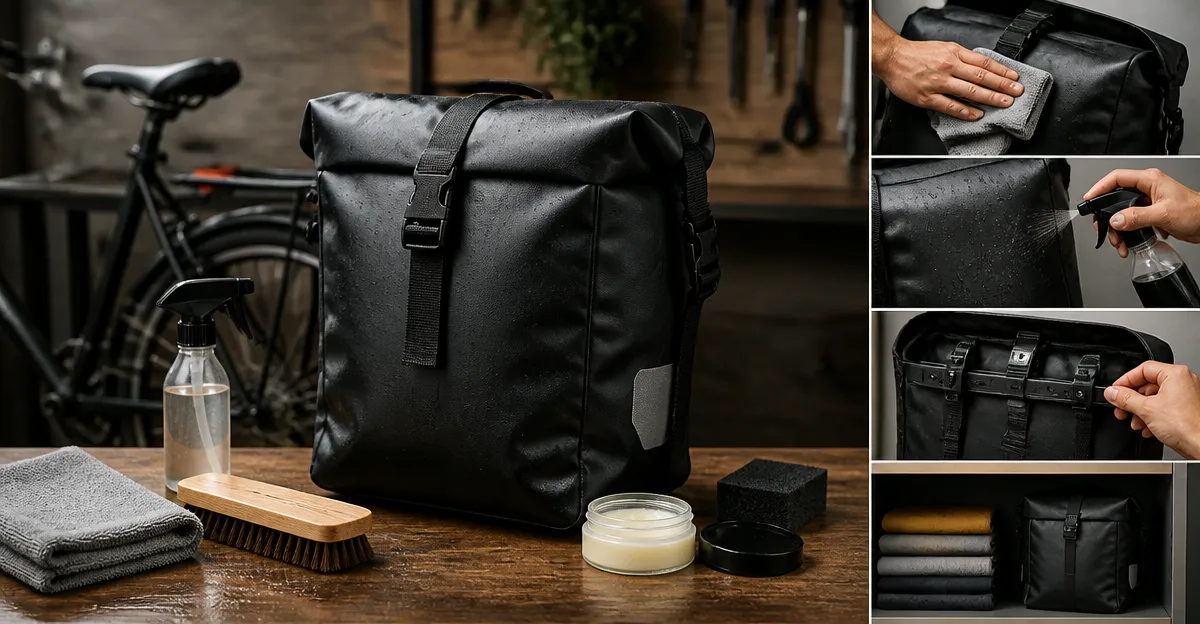
Mix a solution of warm water and a few drops of mild detergent designed for technical textiles. Submerge a lint‑free cloth, wring it out, and gently wipe the entire surface, paying special attention to the 600D PVC‑coated fabric of the KEMIMOTO Bike Panniers. The waterproof rain cover and smooth zippers benefit from this gentle approach, preserving the water‑resistant coating while removing grime. Rinse with a damp cloth, avoid submerging the bag, and let it air‑dry away from direct sunlight to prevent UV damage.
Step 3: Clean Zippers and Hardware
Zippers accumulate grit that can cause snagging; apply a cotton swab dipped in isopropyl alcohol to each tooth, then run the zipper several times to distribute the cleaner. For metal hardware, use compressed air to blow away dust, then wipe with a microfiber cloth. The double‑system fasteners of the Hycline Bike Panniers and the reinforced buckles of the Rhinowalk Bike Pannier benefit from this attention, ensuring smooth operation and long‑term durability.
Step 4: Waterproof and Seal Seams
Even waterproof fabrics can develop micro‑leaks over time. Apply a spray‑on waterproofing product to the exterior, focusing on seams and the rain‑cover attachment points of the KEMIMOTO Bike Panniers. Allow the coating to cure according to the manufacturer’s instructions, typically 24 hours. For added protection, run a seam sealant tape along high‑stress edges; this step mimics the double‑layer waterproof construction found in the Hycline Bike Panniers, extending the bag’s rain‑proof performance.
Step 5: Proper Storage When Not in Use
Store panniers in a cool, dry environment with the rain cover detached to allow airflow. If space permits, hang the bags by their reinforced handles to maintain shape, as the rigid support panel in the Hycline Bike Panniers demonstrates the benefit of structural support. For long‑term storage, place silica gel packets inside each compartment to absorb residual moisture. Avoid compressing the bags under heavy objects, which can deform the waterproof layers and reduce resale appeal.
Step 6: Prepare for Resale Presentation
After cleaning and drying, re‑assemble all straps and verify that the obtuse‑angle design of the KEMIMOTO Bike Panniers provides clear pedaling clearance; this feature is a key selling point. Fill the interior with lightweight items to demonstrate capacity—34 L total for the KEMIMOTO set and 28 L for the Hycline model. Take high‑resolution photos that highlight reflective strips, waterproof seams, and organized pockets, mirroring the marketing images used by the manufacturers.
Tips & Pro Tips
- Test waterproofing by sprinkling water on the rain cover; droplets should bead and roll off.
- Use a dedicated bike‑specific cleaner rather than household bleach to avoid fabric degradation.
- Rotate storage position every few months to prevent permanent creases in the fabric.
- When listing for resale, include the original purchase price ($34.19 for KEMIMOTO, $17.99 for WOTOW, $37.04 for Hycline, $49.99 for Rhinowalk) and highlight the 4.4–4.7 star ratings to build buyer trust.
Troubleshooting
- Stubborn stains: Apply a paste of baking soda and water, let sit for 15 minutes, then gently scrub with a soft brush.
- Zipper catches: Lubricate with a silicone‑based zipper lubricant; avoid oil‑based products that can attract dirt.
- Water leakage after rain: Re‑apply waterproof spray and inspect seams for tears; small cuts can be patched with a waterproof tape.
Conclusion
By following a disciplined inspection, cleaning, waterproofing, and storage routine, one can preserve the functional integrity and aesthetic appeal of high‑end panniers. Maintaining hardware, protecting seams, and documenting condition are essential steps that directly influence resale value. Implement these practices consistently, and the investment in premium panniers will yield both reliable performance and a favorable return when it is time to sell.
Products Mentioned in This Guide
Frequently Asked Questions
How often should I inspect my high‑end bike panniers for wear?
Inspect them after every long ride or at least once a month for scratches, seam damage, and hardware looseness.
What is the best way to clean technical fabric panniers without damaging them?
Use a soft bristle brush or lint‑free cloth with a mild detergent, rinse with low pressure water, and let them air‑dry.
How can I improve the waterproofing of my panniers?
Apply a waterproofing spray or seam sealant after cleaning, following the product’s drying time before use.
What storage method helps maintain resale value?
Store panniers in a well‑ventilated space or airtight containers, keeping them away from direct sunlight and extreme temperatures.
Do I need special tools to maintain premium panniers?
Basic tools like a compressed‑air canister for hardware and optional storage bags are sufficient for most maintenance tasks.