Introduction
This guide explains how to construct a modular reusable container system for bicycle panniers and demonstrates how to use it efficiently. Readers will learn the underlying principles of modularity, the criteria for selecting high‑quality panniers, and step‑by‑step installation techniques for various bike configurations. The article also provides a detailed comparison of three top‑rated products, best‑practice maintenance tips, and answers to common questions.
By the end of the guide, one will be able to assemble a reliable, weather‑proof cargo solution that adapts to daily commuting, grocery trips, and long‑distance touring.
Background and Context
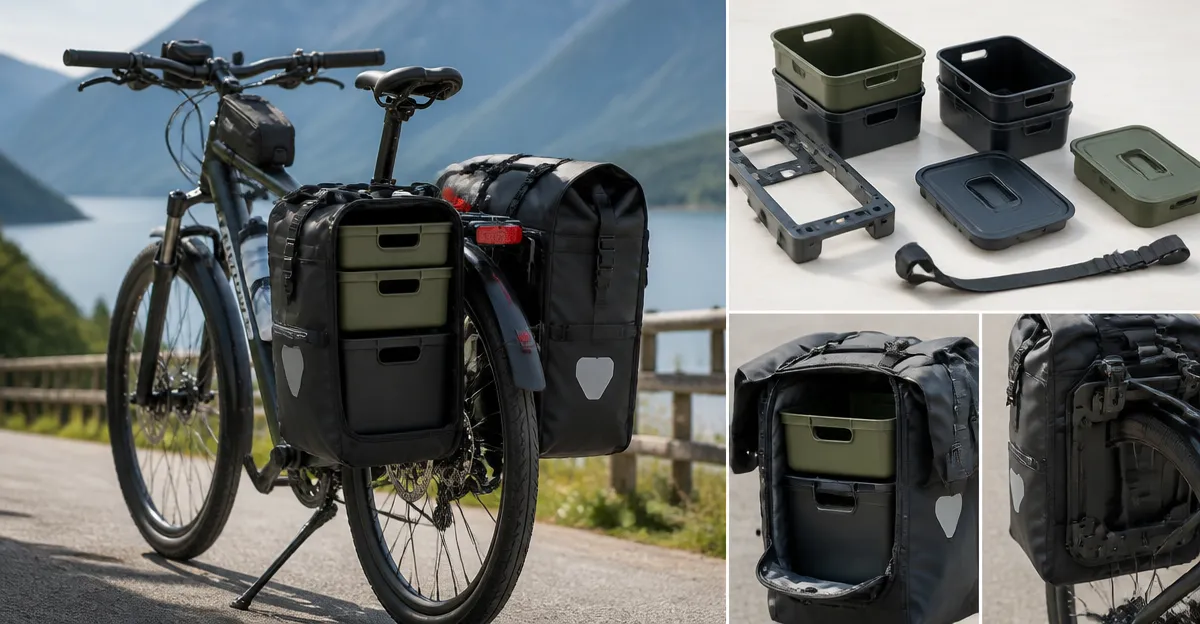
Modern cyclists increasingly require flexible cargo solutions that can be reconfigured without purchasing multiple dedicated bags. A modular reusable container system consists of interchangeable components—such as primary pannier bags, side pockets, rain covers, and reflective accessories—that attach to a bike’s rear rack in a repeatable manner. This approach reduces waste, lowers long‑term costs, and enables cyclists to tailor capacity to specific journeys.
Key concepts include:
- Modularity: The ability to add, remove, or replace individual components while maintaining a secure fit.
- Waterproofing: Protection against rain and splashes, typically achieved with PU‑coated fabrics or dedicated rain covers.
- Visibility: Reflective strips or integrated lighting attachments improve safety during low‑light conditions.
Understanding these concepts prepares the reader to evaluate products and assemble a system that meets personal performance criteria.
Understanding Modular Pannier Systems
Modular systems rely on a core pannier that provides the primary storage volume, complemented by auxiliary accessories. The core bag should feature sturdy attachment points, such as buckles, D‑rings, or webbing straps, that align with standard rear‑rack dimensions (typically 6–7 inches wide). Auxiliary accessories may include:
- Expandable side pockets for tools, water bottles, or quick‑access items.
- Detachable rain covers that seal the main compartment without adding bulk.
- Reflective panels or straps that enhance nighttime visibility.
When selecting a core bag, prioritize waterproof fabric, durable seams, and a capacity that matches the intended load. For example, the Kinetrail Bike Panniers offer 25–35 L of expandable storage, a PU‑coated waterproof exterior, and reflective strips for safety.
These attributes make the Kinetrail model an excellent foundation for a modular system, especially for commuters who need a balance of capacity and weather protection.
Choosing the Right Pannier Size and Material
Capacity requirements vary by use case. A typical grocery run may need 20–30 L, while multi‑day touring can exceed 50 L. Material choice influences durability and water resistance. Polyester with a PU coating provides a lightweight yet waterproof solution, whereas 600D Oxford fabric offers higher abrasion resistance.
The Marscamd Bike Panniers feature a 600D Oxford shell and an integrated rain cover, delivering a maximum capacity of 50 L. Their dual‑compartment layout, including a leak‑proof pocket, supports organized packing for longer trips.
For riders seeking a compact yet sturdy option, the ROCKBROS Bike Rack Bag supplies 13 L of primary volume with expandable side pockets, making it suitable for daily commutes and short errands.
When evaluating material, consider the climate of the typical riding region. In wet environments, prioritize PU‑coated fabrics and dedicated rain covers; in dusty or rocky terrain, select heavier denier fabrics for abrasion resistance.
Integrating Waterproofing and Reflectivity
Waterproofing can be achieved through two approaches: sealed seams with waterproof coatings, or the use of an external rain cover. The Kinetrail and Marscamd models incorporate PU‑coated fabrics that repel water, while the ROCKBROS bag includes a detachable rain cover for added protection during heavy precipitation.
Reflective elements improve safety by increasing the bike’s visibility to motorists. Both the Kinetrail and Marscamd panniers feature reflective strips along the bag’s edges. Additionally, the ROCKBROS bag provides reflective straps and a dedicated attachment point for a rear tail‑light, allowing cyclists to enhance illumination on night rides.
To maximize protection, users should:
- Secure the rain cover over the main compartment before mounting the bag.
- Ensure reflective strips are unobstructed and face outward.
- Attach a rear light to the designated D‑ring or strap for a complete visibility solution.
Installing and Securing Panniers on Different Bike Types
Installation procedures differ slightly between traditional steel frames, aluminum road bikes, and e‑bike rear racks. The general steps are:
- Position the bag’s mounting clips over the rear rack’s crossbars.
- Fasten the primary buckles, ensuring the bag sits evenly on both sides.
- Secure additional straps or webbing to prevent lateral movement during riding.
- Attach any auxiliary accessories, such as side pockets or rain covers, following the manufacturer’s instructions.
The Marscamd panniers include four extra buckle straps and internal stiff plates that prevent the bag from contacting wheel spokes—a critical feature for e‑bikes with wider tires. The ROCKBROS bag utilizes two front straps and two long cross‑rack straps, making it compatible with a broad range of rack designs, including fat‑bike and cargo‑bike frames.
For bikes without a rear rack, a universal rack adapter can be installed, allowing the same modular system to be used across multiple bicycles.
Maintaining and Upgrading Your System
Regular maintenance extends the lifespan of panniers and preserves their waterproof performance. Recommended practices include:
- Wiping the exterior with a damp cloth after each ride to remove dirt and grit.
- Inspecting seams and buckles for wear; replace damaged components promptly.
- Re‑applying a silicone‑based water repellent spray to the fabric every six months.
- Storing the rain cover flat to avoid creases that could compromise sealing.
Upgrading the system can involve adding modular side pockets, detachable tool organizers, or supplemental reflective panels. Because each of the featured products offers attachment points such as D‑rings and webbing loops, users can purchase third‑party accessories that integrate seamlessly.
Comparison and Selection Guide
| Feature | Kinetrail Bike Panniers | Marscamd Bike Panniers | ROCKBROS Bike Rack Bag |
|---|---|---|---|
| Capacity | 25–35 L (expandable) | Up to 50 L (dual compartments) | 13 L (expandable side pockets) |
| Material | PU‑coated waterproof fabric | 600D Oxford water‑resistant fabric | Durable polyester with removable rain cover |
| Waterproof Rating | Fully waterproof (PU coating) | Water‑resistant + rain cover | Rain cover provides waterproofing |
| Reflectivity | Reflective strip on edges | Reflective strips throughout | Reflective straps + tail‑light attachment |
| Price | $29.99 | $42.99 | $35.90 |
| Average Rating | 4.5/5 (37 reviews) | 4.6/5 (138 reviews) | 4.6/5 (2,664 reviews) |
| Best For | Everyday commuters seeking lightweight waterproof storage | Longer tours requiring high capacity and organized compartments | Short rides, city commuting, and users needing a compact modular bag |
Choosing the appropriate product depends on the rider’s typical load, climate, and bike type. For a balance of price, waterproof performance, and moderate capacity, the Kinetrail panniers are a strong choice. Riders planning multi‑day trips with varied gear categories may prefer the larger Marscamd model. Cyclists who value a compact, easily detachable system should consider the ROCKBROS bag.
Best Practices & Tips
- Distribute weight evenly across both panniers to maintain bike handling stability.
- Utilize internal compartments for heavy items such as tools or electronics to keep the center of gravity low.
- Secure loose straps after each ride to prevent rattling and wear.
- Combine a rain cover with reflective tape when riding in foggy or low‑visibility conditions.
- Periodically test the attachment system by gently shaking the bike; any movement indicates a need for tighter buckles.
Frequently Asked Questions
- 1. Can I use these panniers on a bike without a rear rack?
- Yes. Universal rack adapters or a sturdy aluminum frame mount can be installed, allowing the same modular bags to attach securely.
- 2. How do I clean the waterproof coating without damaging it?
- Use a soft damp cloth and mild soap. Avoid abrasive cleaners or high‑pressure streams, as they can degrade the PU coating over time.
- 3. Are the reflective strips sufficient for night riding?
- Reflective strips improve visibility, but they should be complemented with a front headlamp and a rear tail‑light, especially on low‑light routes.
- 4. What is the maximum load these panniers can safely carry?
- Manufacturers typically rate each pannier for up to 10 kg (22 lb). Exceeding this limit may strain attachment points and affect bike handling.
- 5. Can I mix and match components from different brands?
- Because most bags provide standard D‑rings, webbing loops, and buckles, mixing accessories such as side pockets or rain covers is generally feasible, provided the attachment points align.
- 6. How often should I replace the rain cover?
- Inspect the cover for tears or loss of water‑repellent treatment every six months. Replace it if it no longer forms a watertight seal.
Conclusion
Building a modular reusable container system for bike panniers empowers cyclists to adapt their cargo capacity to any journey while maintaining waterproof protection and high visibility. By understanding core concepts, selecting the appropriate product—such as the Kinetrail, Marscamd, or ROCKBROS models—and following best‑practice installation and maintenance procedures, riders can achieve a reliable, long‑lasting solution that enhances both convenience and safety.
The modular approach also aligns with sustainable cycling practices, reducing the need for multiple single‑purpose bags and extending the service life of each component.
Products Featured in This Guide
Kinetrail Bike Panniers
Price: $29.99 | Rating: 4.5/5 (37 reviews)
Featured for its lightweight PU‑coated waterproof fabric, expandable 25–35 L capacity, and integrated reflective strip, making it ideal for everyday commuters.
Marscamd Bike Panniers
Price: $42.99 | Rating: 4.6/5 (138 reviews)
Featured for its 600D Oxford water‑resistant fabric, 50 L maximum capacity, leak‑proof pocket, and comprehensive rain‑cover system, suited for longer tours.
ROCKBROS Bike Rack Bag
Price: $35.90 | Rating: 4.6/5 (2,664 reviews)
Featured for its compact 13 L core, expandable side pockets, detachable waterproof rain cover, and reflective straps with tail‑light attachment, perfect for city commuting.
Frequently Asked Questions
What are the main benefits of using a modular reusable container system for bike panniers?
It lets you reconfigure cargo capacity, reduces waste, and saves money by using interchangeable components instead of multiple dedicated bags.
How do I choose high‑quality panniers for a modular system?
Look for durable, water‑proof fabrics, reinforced stitching, a secure mounting system, and compatible attachment points for the modular accessories.
What is the basic installation process for attaching modular panniers to a rear rack?
Secure the rack, slide the pannier’s mounting clips onto the rack rails, lock them in place, then attach any side pockets or rain covers using the built‑in Velcro or snap fittings.
How can I keep the modular system weather‑proof during rainy rides?
Use the dedicated rain cover that snaps over the pannier and seal all zipper openings with the built‑in flaps to prevent water ingress.
What maintenance tips prolong the life of a modular pannier system?
Clean the fabric with mild soap, dry it thoroughly, regularly inspect and tighten mounting hardware, and store the components in a cool, dry place when not in use.