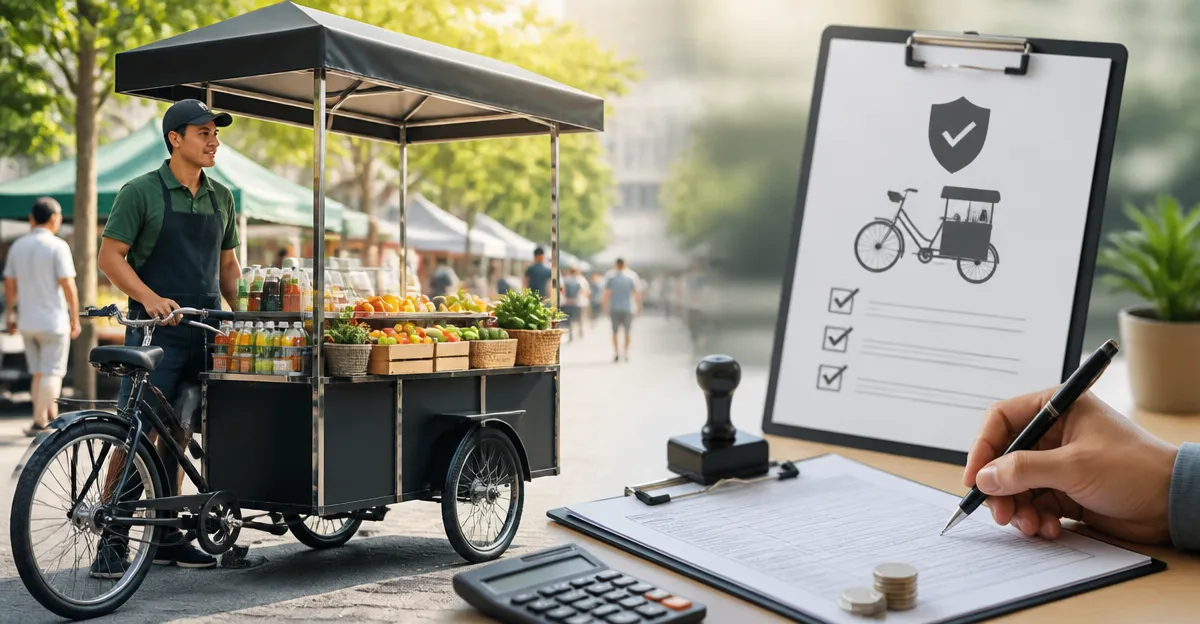
Bicycle Vending Permits for Market Vendors: Complete Step‑by‑Step Guide to Applications, Costs & Compliance
Introduction
Mobile vending on a bicycle has become an increasingly popular method for entrepreneurs to reach customers at farmers markets, street fairs, and community events. This guide explains the regulatory landscape, outlines the application process, and provides cost estimates for obtaining the necessary permits. Readers will also discover practical equipment recommendations that simplify set‑up and compliance, including a compact folding stall and a robust portable cart. By the end of this article, one will possess a clear roadmap for launching a bicycle‑based vending operation that adheres to local ordinances.
Background and Context
Municipalities regulate street vending to ensure public safety, maintain orderly use of public space, and protect consumer interests. Permits typically address issues such as traffic flow, health standards, and accessibility. In many jurisdictions, a bicycle vendor is classified separately from a motorized vehicle vendor, which can result in lower fees and fewer restrictions. However, vendors must still demonstrate compliance with zoning laws, fire codes, and, when applicable, food‑service regulations.
Understanding the hierarchy of permits is essential. At the most basic level, a general vending permit grants permission to operate in a designated public area. A supplemental food‑handling permit is required for selling prepared items, while a special event permit may be necessary for temporary festivals. Vendors should consult the city’s planning department, health department, and police bureau to identify all required authorizations.
Key Steps in the Permit Application Process
- Research Local Requirements – Visit the official website of the city or county where the vending activity will occur. Locate the vendor licensing section and download any application forms, fee schedules, and compliance checklists.
- Prepare Supporting Documentation – Gather proof of identity, business registration, liability insurance, and, if applicable, a food‑service certification. Many jurisdictions also request a site plan illustrating the layout of the vending equipment on the bicycle.
- Submit the Application – Complete the online or paper application, attach all required documents, and pay the initial processing fee. Some cities offer a streamlined electronic portal that provides real‑time status updates.
- Schedule Inspections – After the initial review, health inspectors or fire marshals may visit the vending site to verify compliance with safety standards. Vendors should be prepared to demonstrate proper storage, waste disposal, and equipment stability.
- Receive Permit Approval – Once all conditions are satisfied, the authority issues a permit that includes a unique identification number, validity period, and any specific operating restrictions.
Each step may vary slightly depending on local policy, but the above framework applies to the majority of U.S. municipalities.
Cost Considerations
Permit fees are influenced by factors such as location, type of goods sold, and duration of the permit. A typical annual general vending permit ranges from $50 to $250. Food‑service permits often add $100 to $300, reflecting health‑department oversight. Special event permits are usually charged per event and can range from $25 to $150.
Additional costs may include insurance premiums (often $200–$500 annually for general liability), equipment purchases, and branding expenses. Vendors should budget for these recurring expenses to maintain continuous compliance.
Equipment Recommendations for Bicycle Vendors
Efficient equipment enhances both compliance and customer experience. A sturdy, lightweight stall that folds flat fits easily on a bicycle trailer, while a lockable canopy protects merchandise from weather exposure. The following products have been selected for their durability, ease of assembly, and suitability for mobile vending.
Folding Vendor Stall Cart with Canopy
The Folding Vendor Stall Cart with Canopy offers a 330‑lb load capacity, making it ideal for transporting a variety of goods, from fresh produce to handcrafted items. Its all‑steel heavy‑duty frame resists wobbling, and the waterproof 600D Oxford canopy provides UV protection, allowing vendors to operate in rain or shine. The cart folds flat in minutes and fits comfortably in a car trunk or bicycle trailer, eliminating the need for a separate transport vehicle. With a five‑star rating based on a single review, the product demonstrates strong customer satisfaction.
- Folds flat for easy storage and transport
- All‑steel frame supports up to 330 lbs
- Waterproof canopy with UV protection
- No tools required for assembly
- Suitable for farmers markets, festivals, and street vending
Portable Vendor Cart with Lockable Canopy
The Portable Vendor Cart with Lockable Canopy provides a larger footprint and robust construction for vendors who require additional shelving space. Constructed from powder‑coated iron, the cart resists rust and offers a stable platform even on uneven terrain. Four 360° swivel casters with locking brakes ensure effortless mobility and safety during transactions. Priced at $699.99 and backed by a five‑star rating, this cart is a premium option for high‑volume vending operations.
- Versatile commercial hub for food, retail, and events
- Lockable striped canopy protects against light rain
- 360° swivel casters with locking brakes for stability
- Reinforced metal shelving for maximum product visibility
- Rugged durability with easy setup
Comparison and Selection Guide
| Feature | Folding Vendor Stall Cart with Canopy | Portable Vendor Cart with Lockable Canopy |
|---|---|---|
| Maximum Load Capacity | 330 lbs | Not specified, but designed for high‑volume loads |
| Portability | Folds flat; fits in car trunk or bicycle trailer | Large footprint; requires a vehicle for transport |
| Canopy Protection | Waterproof 600D Oxford, UV resistant | Lockable striped canopy, weather‑protected |
| Mobility | Manual lift; no wheels | Four 360° swivel casters with brakes |
| Price | Not listed (Amazon rating only) | $699.99 |
| Ideal Use Case | Small‑scale vendors needing compact, lightweight setup | Vendors with larger inventory and need for stable, mobile platform |
Vendors should assess their inventory size, transport method, and budget when selecting equipment. For cyclists who rely on a trailer, the folding cart offers unmatched convenience. For vendors operating from a fixed stall or a larger vehicle, the portable cart provides superior shelving and stability.
Best Practices and Tips for Bicycle Vendors
- Secure the vending equipment to the bicycle frame or trailer using lockable straps to prevent theft during transit.
- Maintain a copy of the permit ID on the cart, visible to inspectors and law‑enforcement officers.
- Conduct a pre‑event checklist that includes canopy inspection, weight distribution verification, and insurance card availability.
- Utilize branding elements such as banners or magnetic signage that do not obstruct the canopy’s UV protection.
- Schedule regular maintenance of wheels, brakes, and structural joints to ensure ongoing safety compliance.
Frequently Asked Questions
- Do I need a separate permit for each city where I sell? Yes, most municipalities require a distinct permit for each jurisdiction. Some regions participate in reciprocal agreements, but vendors must verify local policies.
- Can I sell hot food from a bicycle cart? Selling hot food typically requires a food‑service permit and compliance with health‑department temperature controls. A portable cart with a lockable canopy, such as the one linked above, can meet many of these requirements when paired with appropriate equipment.
- How long does the permit approval process take? Processing times vary; many cities complete review within two to four weeks, while special event permits may be issued within a few days if documentation is complete.
- Is liability insurance mandatory? While not universally required, most jurisdictions strongly recommend or mandate general liability coverage to protect against accidents and product claims.
- What are the penalties for operating without a permit? Penalties can include fines ranging from $100 to $1,000, confiscation of equipment, and possible legal action for repeated violations.
Conclusion
Obtaining bicycle vending permits involves careful research, diligent documentation, and adherence to local regulations. By following the step‑by‑step process outlined in this guide, vendors can secure the necessary authorizations, manage costs effectively, and operate with confidence. Selecting appropriate equipment, such as the compact folding stall or the robust portable cart, further enhances compliance and customer appeal. With proper planning and ongoing attention to best practices, a bicycle vending business can thrive in diverse market environments.
Products Featured in This Guide
Folding Vendor Stall Cart with Canopy
Rating: 5/5.0 (1 review)
Why featured: Provides a lightweight, fold‑flat solution that fits on a bicycle trailer, making it ideal for mobile vendors who need rapid setup and transport.
Portable Vendor Cart with Lockable Canopy
Price: $699.99
Rating: 5/5.0 (1 review)
Why featured: Offers extensive shelving, lockable weather‑proof canopy, and 360° casters, making it suitable for high‑volume vendors who require stability and visibility.
Frequently Asked Questions
What is a bicycle vending permit and why do I need one?
A bicycle vending permit authorizes you to sell goods from a bike‑mounted stall in public markets or streets, ensuring compliance with local safety, health, and zoning rules.
How do I apply for a bicycle vending permit in most municipalities?
Submit a completed application to the city’s licensing department, attach proof of insurance, a site plan of your bike stall, and pay the required fee, then await inspection approval.
What are the typical costs associated with obtaining a bicycle vending permit?
Permit fees usually range from $25 to $150 annually, plus optional costs for insurance ($100‑$300) and health inspections if selling food.
Are there specific equipment requirements for a compliant bicycle vending setup?
Most jurisdictions require a sturdy, portable cart or folding stall with secure anchoring, a clean food‑handling surface, and any necessary signage or lighting.
How often must I renew my bicycle vending permit and what documentation is needed?
Permits are generally renewed yearly; you must provide proof of continued insurance, a recent health inspection report (if applicable), and pay the renewal fee.